
Accessibility: games finally learned to include
The city I built in my head always had one rule: it belongs to everyone who lives in it — including those urban planning forgot. Games spent decades building cities for a single standard body: agile hands, perfect vision, full hearing. The silent revolution of recent years was noticing the obvious: players exist in every body. And design finally started acting like it knows.
The turning point
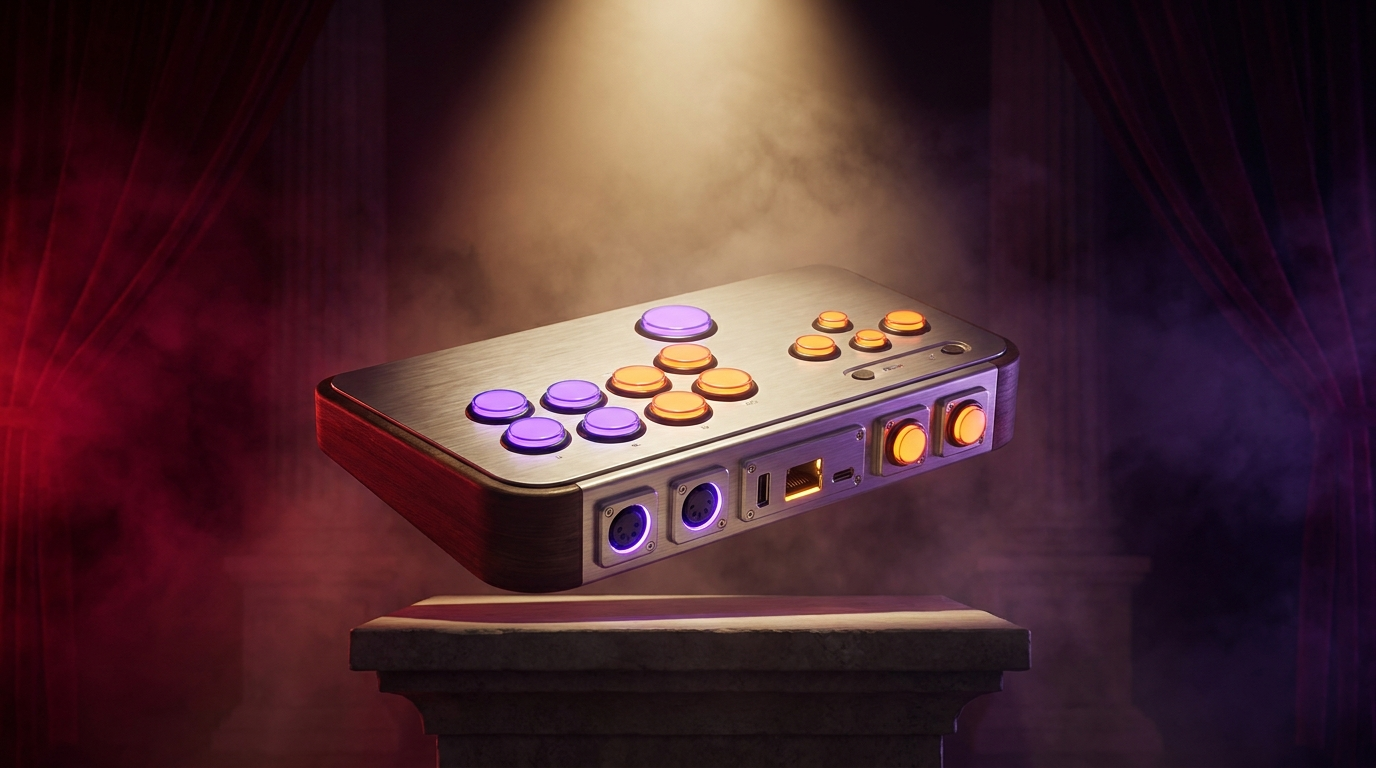
The change's landmark was the generation of blockbusters that treated accessibility as a design discipline, not a checkbox: dozens of granular options — from full control remapping to menu narration, from high contrast to a game fully navigable by sound. The adaptive controller launched by one of the giants became the era's physical symbol: official hardware designed for bodies the industry used to pretend didn't exist. And the community of players with disabilities — which always existed, playing through heroic workarounds — finally entered the credits as consultants, not afterthoughts.
The secret skeptics ignore
Here's the part that dismantles the resistance: accessibility benefits everyone. The subtitles improved for deaf players are used by the overwhelming majority of all players. Remapping for atypical hands serves the left-handed, the temporarily injured, the parent holding a baby in one arm. Colorblind mode saves the ranked match of someone who never knew they saw colors "wrong". Adjustable difficulty — the most polemic option — is the same one that keeps the time-starved veteran and the recovering anxious player in the city. It's urban planning's old lesson: the ramp built for the wheelchair is used by the stroller, the bicycle and the rolling suitcase. Nobody loses anything. It was always so.
What's still missing
This is a progress report, not a victory one. Excellence still concentrates in giant budgets; the average indie lacks tools and knowledge (though modern engines keep lowering that barrier). Entire genres remain hostile by tradition — and the mature debate between "author's vision" and "player's access" still produces more shouting than synthesis. The standard is set; universalization, pending.
The verdict
Accessibility isn't charity — it's quality engineering and it's market: millions of players with disabilities, plus the millions situationally benefited. But above the spreadsheet stands the principle governing any decent city: a good place is one that expels no one at the door. Games took long, but they learned. May they never unlearn.
— From the shadows, DKG.

The Knight
Editor, Dark Knight Gaming
DKG's editorial vigilante. Covers gaming culture, hardware and the industry from the city's shadows — with method, skepticism and zero clickbait.
About the project →Related

Game preservation: we are losing our history
Most classic games can't be legally purchased anywhere. While cinema built its film archives, games let their history rot on switched-off servers.

Mobile: the giant hardcore gamers insist on ignoring
More than half of gaming's worldwide revenue fits in a device the enthusiast calls "not a real gaming machine". The decade's most expensive misread.
Women are the majority: the new gamer profile
In Brazil, 52.8% of the gaming public is female, and Gen Z has overtaken Millennials. The stereotype is dead — someone just needs to tell the industry and the lobbies.