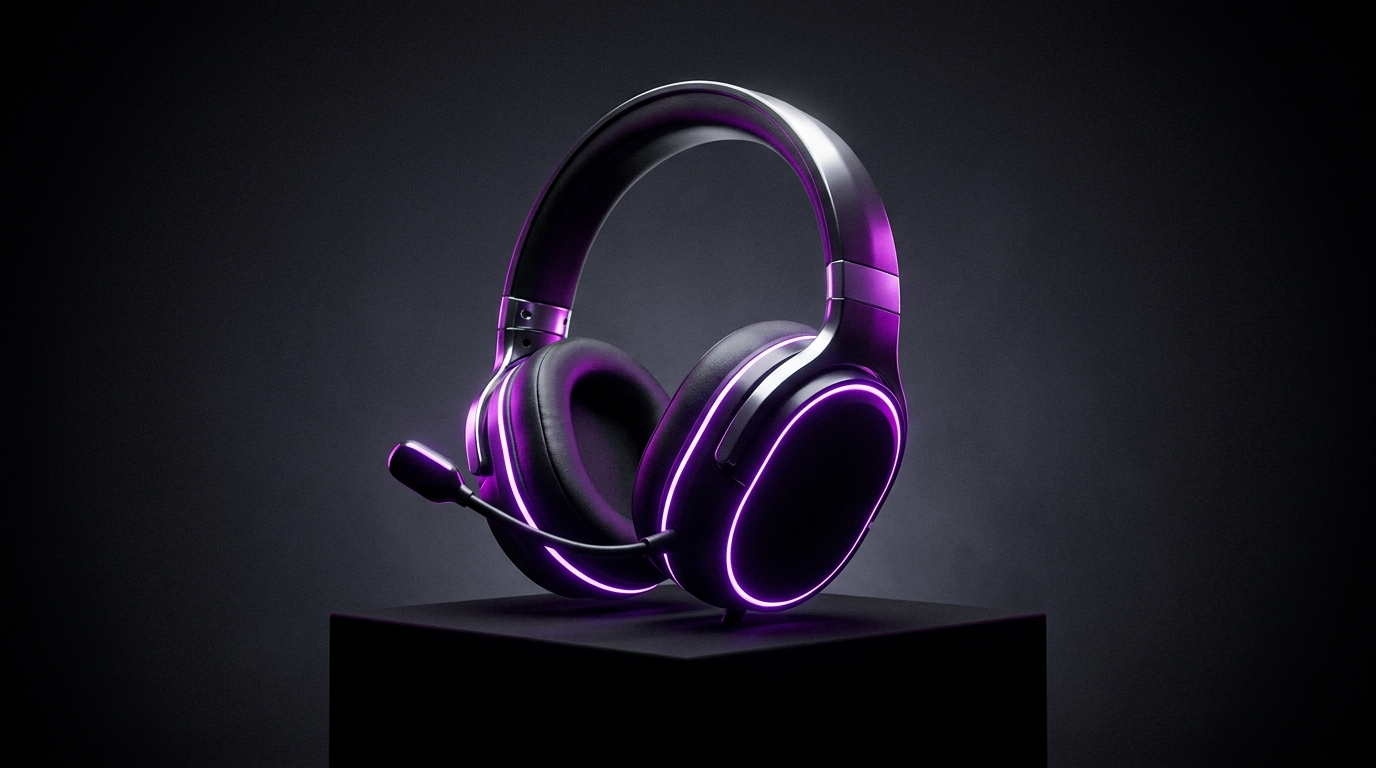
Gaming headsets: what really matters (and what's just marketing)
On a night patrol, vision fails. Smoke, darkness, blind corners. What remains is hearing. In competitive games the logic is identical: whoever hears better, reacts first. And that's exactly why headset marketing is so loud — and so full of traps.
What really matters
Drivers and sound signature. Driver size (40mm, 50mm, 53mm) matters less than its quality and tuning. For competitive play you want clear upper-mids — that's where footsteps, reloads and breaking glass live. Boomy bass impresses in the unboxing and masks information in ranked.
Comfort. The best headset is the one you forget you're wearing. Under 350g, pads that don't cook your ears, a headband that doesn't clamp. A four-hour vigil reveals what the product page hides.
Microphone. If you play in a team, your mic is a collective responsibility. A mic with decent pickup and basic noise rejection is worth more than any LED. A team that hears each other clearly makes better decisions.
Passive isolation. Closed cups that seal out the room beat most active noise cancelling in a gaming scenario.
What's (almost always) marketing
"7.1 surround" on a stereo headset. It's software processing, not seven speakers. Sometimes it helps; often it hurts real positioning. A good stereo pair with precise imaging beats a badly calibrated virtual 7.1 nine times out of ten.
RGB on a headset. You can't see your own ears. Whoever pays for it is financing the streamer aesthetic, not their own performance.
"Powerful bass drivers for gamers." Translation: an aggressive V-shaped curve that swallows detail. Great for trailers, bad for clutches.
The investment hierarchy
My advice, from someone who has tested entire arsenals: comfort first, then sound signature, then microphone, and wireless only if the latency is provably low. A simple USB DAC/soundcard often improves your audio more than swapping headsets.
Gear doesn't create skill. But the right gear removes the excuses — and with no excuses left, all that remains is to improve.
Which headphone type for each mission
| Mission | Right type |
|---|---|
| Ranked in a noisy home | Closed-back with good passive isolation |
| Long immersion sessions | Open-back (wide stage, cool ears) |
| Nightly squad Discord | Closed-back with a decent detachable mic |
| Elevating everything | Add a simple USB DAC/amp |
— From the shadows, DKG.
Quick answers
Is virtual 7.1 worth it?
Usually not: it's software processing that can even blur real positioning. A good stereo pair with precise imaging wins — crisp footsteps beat box-label 'surround'.
Do music headphones work for gaming?
Yes, and often better than the equivalent 'gamer' price tier. The trade-offs: microphone (solve with a desk/lavalier mic) and, on some models, isolation.
Is the built-in mic enough for ranked?
For team calls, yes — as long as it captures close to the mouth without popping. For streaming or recording, a dedicated mic is another sport.
Wired or wireless?
Modern wireless adds no perceptible delay; the real trade is comfort and a clean desk versus battery management. At top competitive level, cable remains the standard to eliminate variables.
🦇 The Knight's Recommended Arsenal
As an affiliate, I may earn a commission from purchases made through the links below — at no extra cost to you. Learn more.
HyperX Cloud Stinger 2
The essentials done right: start here.
Razer BlackShark V2 X
Positional audio to rank up with an edge.
SteelSeries Arctis Nova 7
Total freedom, minimal latency.
HyperX Cloud III
Wide soundstage for maximum immersion.
Creative Sound Blaster G3
Elevates any headset to another level.

The Knight
Editor, Dark Knight Gaming
DKG's editorial vigilante. Covers gaming culture, hardware and the industry from the city's shadows — with method, skepticism and zero clickbait.
About the project →Related
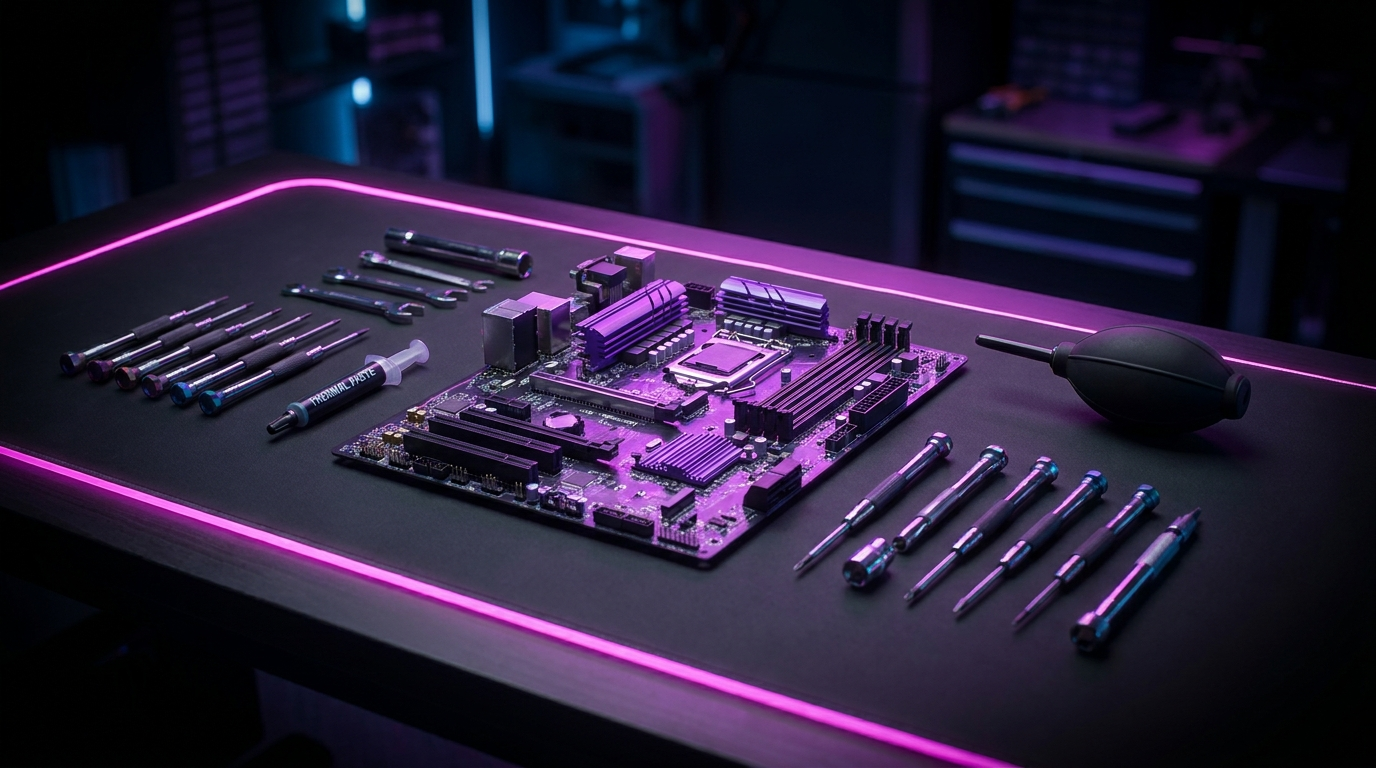
How to make your setup last 5 years
The machine doesn't die of old age — it dies of neglect and wrong upgrades. Maintenance and strategy for half a decade of loyal service.
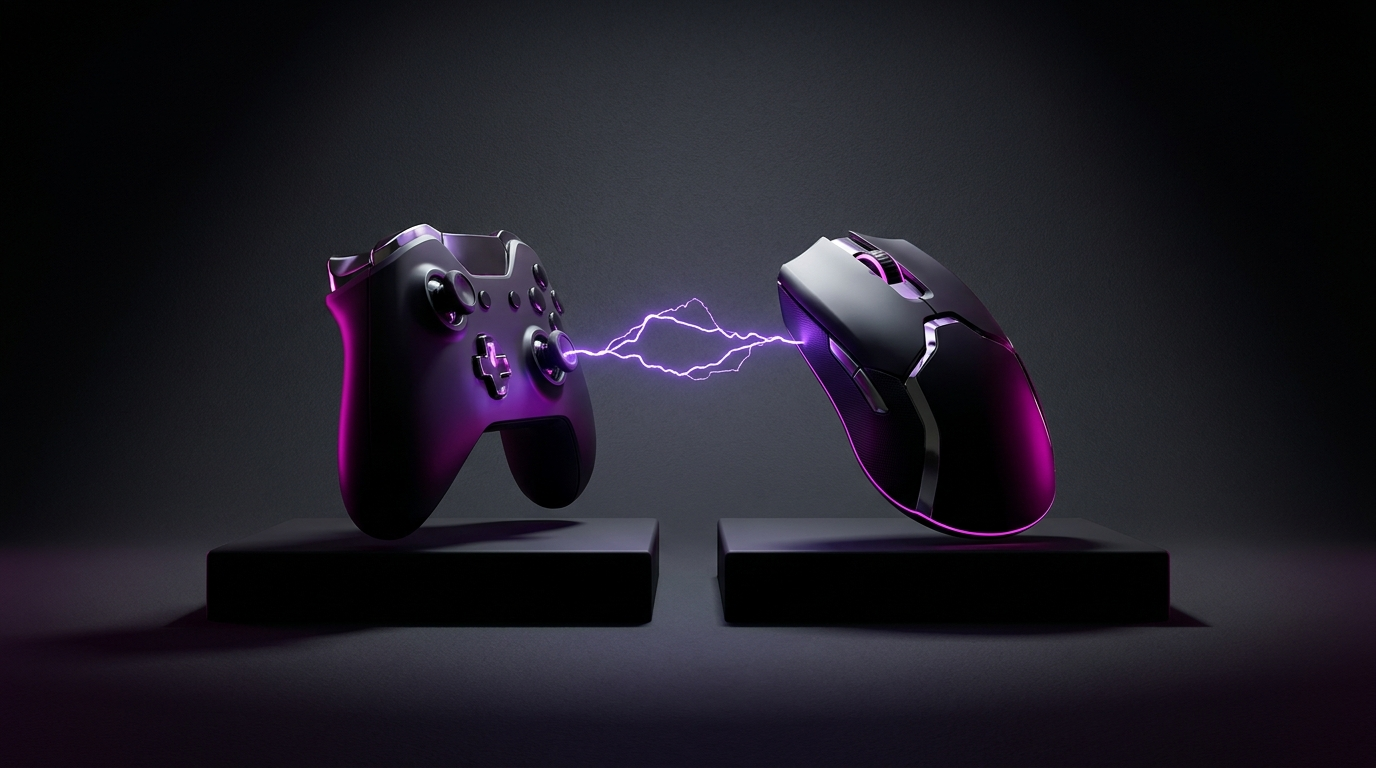
Controller vs mouse and keyboard: the war nobody wins
Decades of flame war, and the answer remains the same: it depends on the weapon, it depends on the mission. An honest dossier on the hobby's oldest rivalry.
Microphones for squad and stream: the most underrated upgrade
You invest to hear footsteps thirty meters away — and talk to your team through a mic that sounds like a pocket radio. Time to balance the equation.