
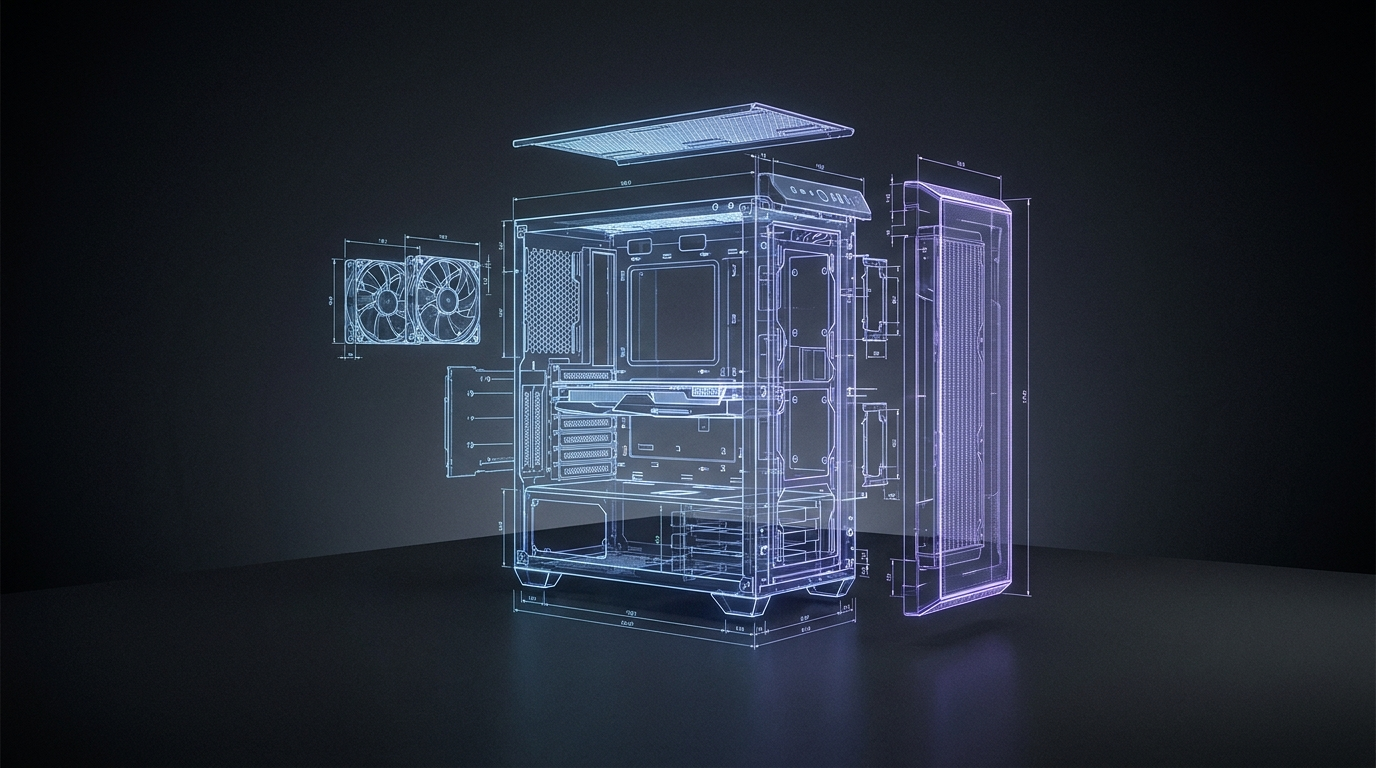
How to choose your first gaming PC in 2026 without falling into traps
My first rule of investigation applies to hardware too: start with the right question. It isn't "what's the best PC?" — it's "what's the best PC for your mission?".
Someone playing competitive esports at 1080p needs a very different machine from someone chasing open worlds on ultra. Define the three or four games you'll actually run, your monitor's resolution and the total budget — peripherals included, which rookies always forget. Without that dossier, any salesman leads you wherever he wants.
The hierarchy of money well spent
In an entry-level PC, every dollar has to work. The priority order I've defended for years: graphics card first (60% of gaming experience is born there), a compatible processor with no bottleneck, 16GB of DDR5 RAM as the floor, a 1TB NVMe SSD — and a quality power supply, the most underestimated component in history. A bad PSU doesn't warn you: it takes everything else with it when it fails.
The classic traps
Learn to spot the ambushes. The showcase "gaming" PC: a case full of LEDs, a decent processor and a graphics card from three generations ago. The impossible upgrade: motherboards so cheap they'll never accept anything better. The forgotten monitor: spending everything on the tower and playing on a generic 60Hz panel is buying a race car to drive in reverse. Marketing RAM: 32GB helps little when the graphics card is weak.
Build or prebuilt?
In 2026, prebuilts from serious shops stopped being shameful — the price gap shrank and unified warranty has real value for beginners. Build it yourself if you want to learn and save; buy it ready if you want to play tomorrow. Just never buy without checking the exact model of every component. "Dedicated graphics card" with no name and number is a synonym for ambush.
The advice nobody gives
Leave 10% of the budget unspent. The rookie discovers after the purchase that they need a cable, an adapter, a better cooler. Whoever plans the exit before entering the building never gets trapped inside.
The city is full of expensive machines doing very little. Don't become another one. Choose coldly, play passionately.
Quick reference by budget
| Tier | What to expect | Where the money goes |
|---|---|---|
| ~$600 (entry) | 1080p medium/high in esports and light titles | Entry/used GPU + 16GB + 512GB SSD |
| $800–1,100 (sweet spot) | 1080p ultra, viable 1440p in many games | New mid-range GPU + 16GB + 1TB SSD |
| $1,400+ (strong) | Comfortable 1440p, entry 4K | Upper-tier GPU + 32GB + Gen4 1TB |
Prices drift with sales, but the ratios don't: half the budget on the graphics card, and never cheap out on the PSU.
— From the shadows, DKG.
Quick answers
How much does a decent gaming PC cost in 2026?
A dignified entry point sits around $600 with selected entry or used parts; the balance of price and longevity lives in the $800–1,100 range.
Gaming PC or console?
Console wins on simplicity and upfront cost; PC wins on versatility (work, mods, upgrades, free-to-play and aggressive sales). If the machine serves more than one purpose, the PC amortizes the difference.
Is buying used parts worth it?
Used GPUs and cases can be great deals; used PSUs, SSDs and motherboards carry hidden risk. Buy used only with on-the-spot testing or seller warranty.
Is 16GB of RAM still enough?
For gaming, yes. For gaming while recording with a browser and voice apps open, 32GB became the new comfortable — but prioritize GPU before extra RAM.
🦇 The Knight's Recommended Arsenal
As an affiliate, I may earn a commission from purchases made through the links below — at no extra cost to you. Learn more.
Skytech Nebula Gaming PC
Start the patrol without building part by part.
GeForce RTX 5060
The heart of performance without paying flagship prices.
Corsair CX650
The silent guardian of everything else.
Montech AIR 903
Low temperatures, low noise, long life.
Corsair Vengeance DDR5 16GB
The dignified minimum for 2026.

The Knight
Editor, Dark Knight Gaming
DKG's editorial vigilante. Covers gaming culture, hardware and the industry from the city's shadows — with method, skepticism and zero clickbait.
About the project →Related

How to play more while spending less
The most expensive hobby in the world — for those who don't know the routes. With method, your yearly fun can cost less than a single launch title.
Gamer glossary: the terms you pretend to understand
Every city has its dialect. The gaming one has dozens. This is the reference file so you never nod along pretending again.

Backlog under control: finish more by playing less
Your library has more games than your life has hours. That's not a time problem — it's a strategy problem. And strategy is my department.