Fighting games: from the arcade to the global competitive stage
One versus one, no excuses, no team to blame. I recognize in that format something I practice every night: the confrontation where only you, the opponent and the truth exist. Fighting games are the duel in its pure state — and their history is the city's most honorable.
The coin era
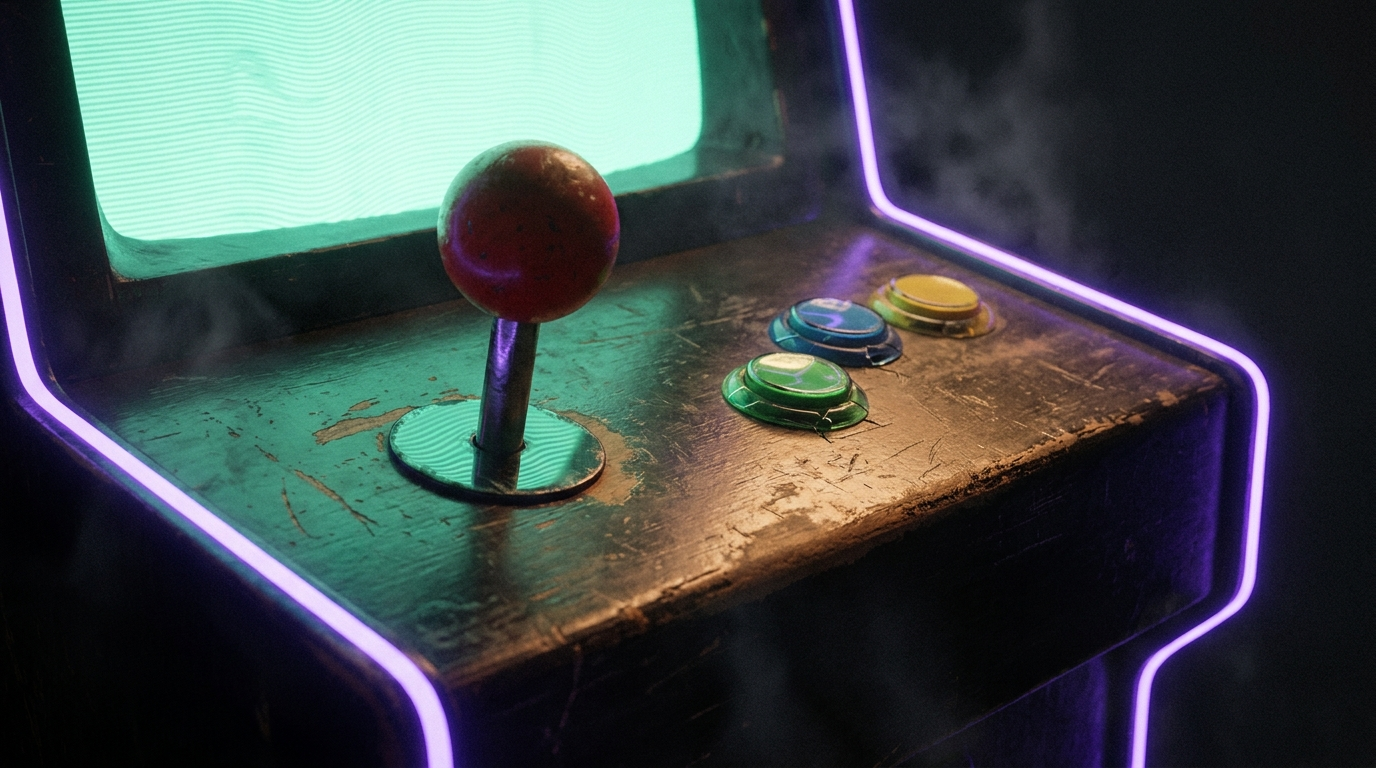
Early 90s: a fighting game with six buttons and secret moves sets the planet's arcades ablaze and accidentally invents in-person competitive culture. The liturgy was physical: the coin placed on the cabinet's edge announced "I challenge the winner" — the original ranking system, serverless, refereed by the queue. There were born the main, the counterpick, respect earned by hand, and the eternal figure of the local veteran who destroyed everyone with the "weak" character. The arcade was dojo, courtroom and theater.
The science of the punch
Behind the special moves, the genre hides gaming's most technically profound system. Frame data: every move measured in sixtieths of a second — startup, active, recovery; the elite player memorizes tables like a lawyer memorizes case law. The neutral game: the spacing dance before first contact, chess at sixty frames per second. Conditioning: the best don't win by reacting — they win by training the opponent to fail, planting habits for three rounds to harvest them in the fourth. And execution: the tournament combo is a pianist's fine motor skill, rehearsed for months. No genre demands so much of body and mind at once — and none forgives less.
The desert crossing
When the arcades died, the genre's death was decreed alongside. The community refused the certificate: the scene migrated to basements, rental shops and rented classrooms, keeping the in-person flame alive — because a fighting game with network delay was heresy — until modern netcode technology bent physics in distance's favor. Community tournaments grew from twenty people in a hall to packed arenas broadcast worldwide, with moments that became oral legend — impossible reads, one-pixel comebacks, the silence of thousands before the final blow.
The honor remains
The genre remains the most welcoming to in-person beginners and the most merciless toward shortcuts: there's no carry, no team luck — only the next round and what you learned from the last one. In an era of outsourced victories, one-versus-one remains gaming's most honest court. I, who pass judgment in alleys, recognize the nobility of the mat.
— From the shadows, DKG.

The Knight
Editor, Dark Knight Gaming
DKG's editorial vigilante. Covers gaming culture, hardware and the industry from the city's shadows — with method, skepticism and zero clickbait.
About the project →Related
Souls: the saga that taught games to respect the player
Before 2009, difficulty was punishment without purpose. After Demon's Souls, it became a language of respect. I was there. I remember.

Survival horror: the history of the genre that taught games fear
Fixed cameras, counted bullets and creaking doors: the chronicle of the genre that proved the player's weakness is design's most powerful tool.
Multiplayer: from split screen to global crossplay
From your friend's elbow on the couch to a squad spread across three continents: how games learned to connect us — and what got left on the couch.