Souls: the saga that taught games to respect the player
The long watch taught me that fear has its uses. Demon's Souls taught me that death does too.
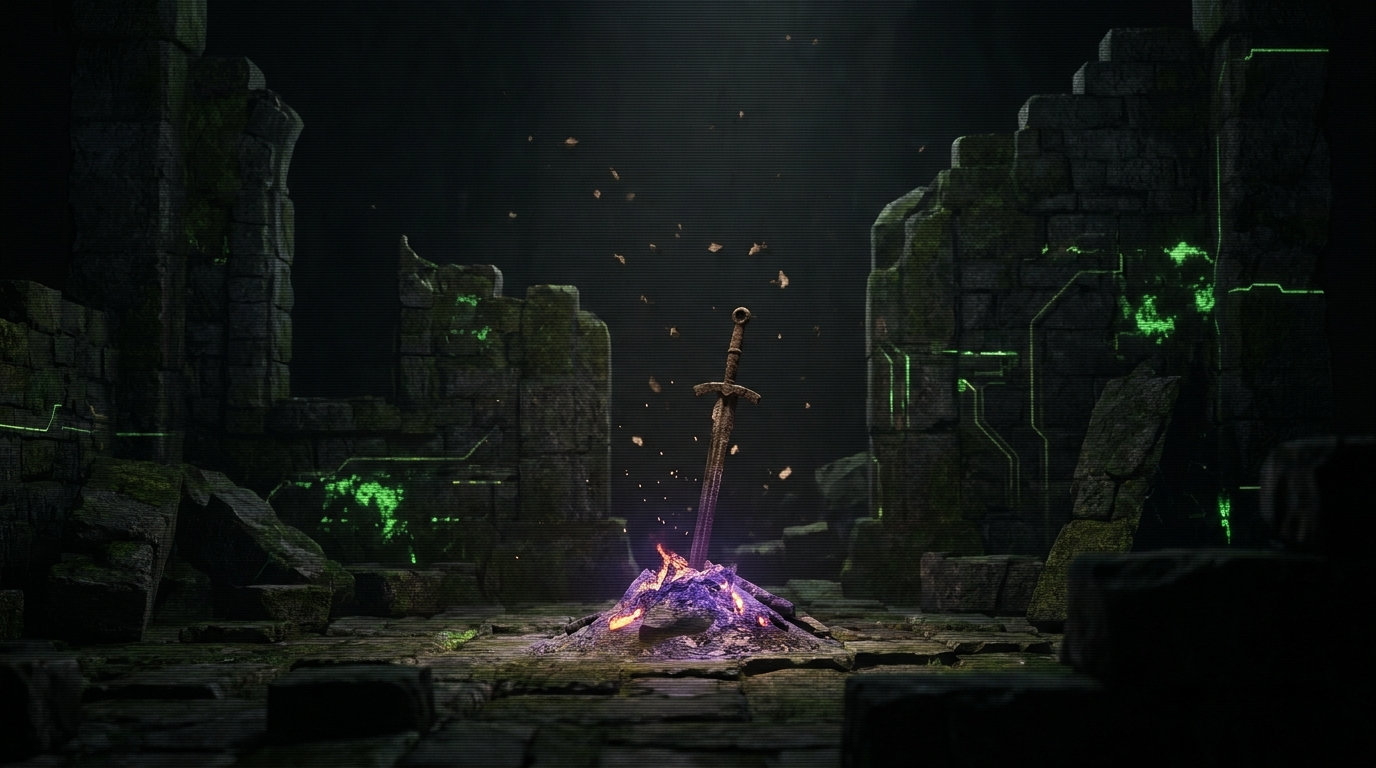
Before 2009, "hard" was almost always a synonym for lazy design: bosses with double health, scarce checkpoints, punishment without a lesson. Then FromSoftware released a grim RPG almost nobody asked for — and it became the measuring stick for an entire decade.
Death as a teacher
In Souls, dying isn't failure: it's a lesson. Every fall leaves a report — the attack you didn't read, the greed of one swing too many, the dodge mistimed. The game never cheats: the rules are in plain sight, the patterns repeat, and the only variable that truly evolves is you. When victory comes, it wasn't given. It was built.
A world that folds into itself
Dark Souls' level design did for architecture what its combat did for discipline. Lordran isn't a map: it's an organism. Every unlocked shortcut — the elevator descending from the church, the ladder back to the bonfire — is a reward for orientation, not strength. And the storytelling follows the same philosophy: the story isn't told, it's left at the crime scene. Item descriptions, ruins, corpses arranged in ways that suggest entire tragedies. The player becomes an investigator — and an investigator cares.
What the industry learned
The proof of a system's greatness is how many try to copy it. Hollow Knight, Nioh, Lies of P, and the definitive consecration in Elden Ring: the "soulslike" stopped being a niche and became common grammar. But the lesson was never "be hard". It was "be fair". Difficulty without clarity is cruelty; clarity without demand is boredom. Souls found the exact point between the two — and proved that a player treated like an adult repays it with devotion.
Fifteen years later, I still return to those ruins. Not for nostalgia. For study. Some works we admire; others, we patrol forever.
— From the shadows, DKG.

The Knight
Editor, Dark Knight Gaming
DKG's editorial vigilante. Covers gaming culture, hardware and the industry from the city's shadows — with method, skepticism and zero clickbait.
About the project →Related

Survival horror: the history of the genre that taught games fear
Fixed cameras, counted bullets and creaking doors: the chronicle of the genre that proved the player's weakness is design's most powerful tool.

Multiplayer: from split screen to global crossplay
From your friend's elbow on the couch to a squad spread across three continents: how games learned to connect us — and what got left on the couch.
Portables: the lineage that led to the handheld era
From the AA-battery brick to the pocket PC: forty years of one stubborn idea — that games should fit in a backpack and in a life.