
Portables: the lineage that led to the handheld era
Every pocket technology starts as a joke and ends as a standard. Gaming portables lived that arc for forty years — and today's handheld era isn't a novelty: it's the final chapter of a stubborn lineage I've watched post by post.
The founding dynasty
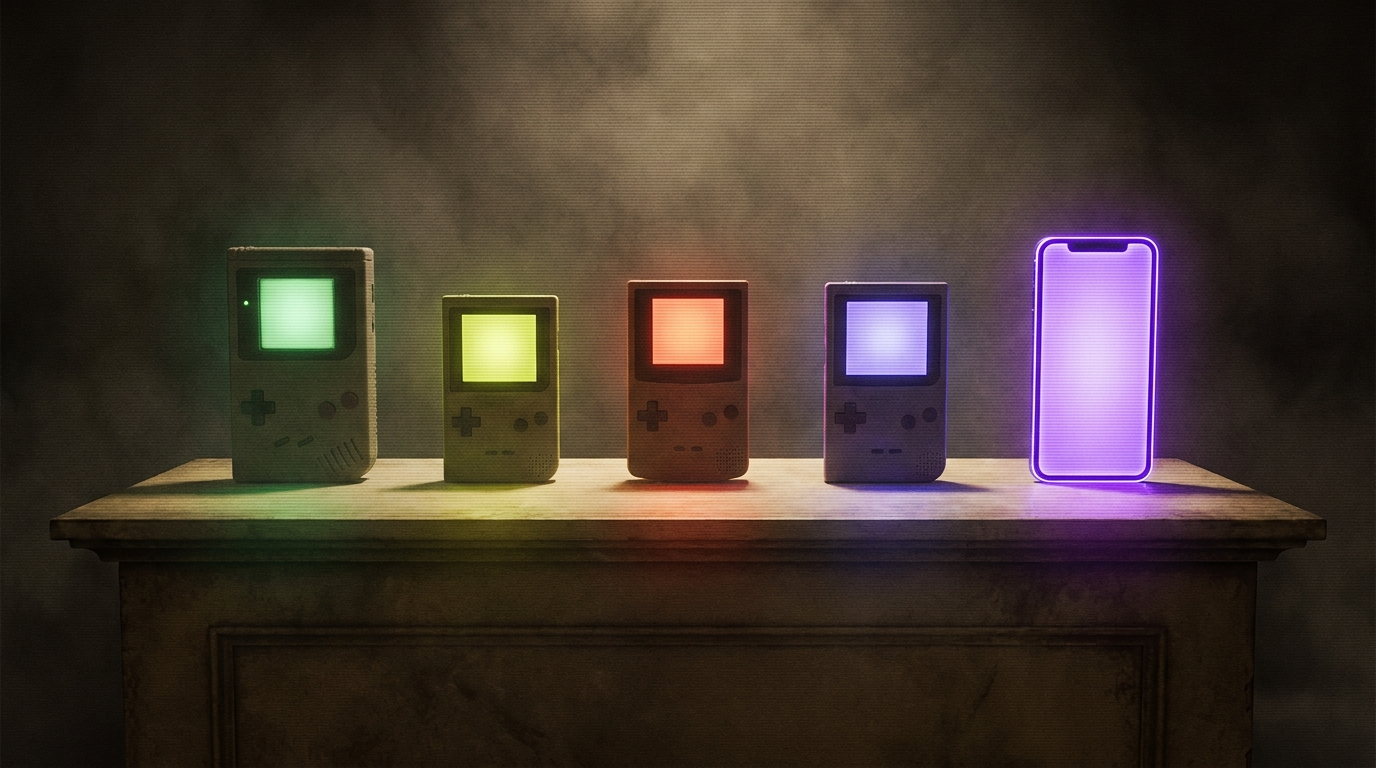
1989: a grey brick with a pea-soup screen and four AA batteries faces technically superior competitors — color screens, powerful hardware — and buries them all. The category's inaugural lesson, written in its very first chapter: in the pocket, battery life and library beat power. The weeks-long batteries and one hypnotic block puzzle defeated every spec sheet. The following dynasty repeated the doctrine for decades: dual screens, touch, glasses-free 3D — innovations of form, never a horsepower race. The portable learned early that it was a different sport.
The smartphone assault
The 2010s: the smartphone swallows the world and the category's death is decreed — again. The phone was in every pocket; who would carry two devices? The answer came in 2017, elegant as a rehearsed counter: a console that was portable and home machine at once, with real physical controls and a library the phone would never have. A hundred-some million units later, the inverted question was placed on record: who said the pocket belonged to the phone?
The final convergence
The current chapter closes the lineage's circle: the PC — the platform of maximum power, of the mouse, of the desk — bent itself to the portable format. PC handhelds took the largest library in gaming history and put it in a backpack, with the founding philosophy intact: not the strongest hardware; the freest access. Adult life fragmented play time, and the portable was always the answer to fragmented time — the same product, waiting for demographics to catch up. It caught up: the generation that grew up with the grey brick now has thirty minutes on the couch and a salary to spend.
The lineage's moral
Forty years, five announced "deaths", zero actual deaths. The portable survives because it serves the hobby's oldest truth: the game wants to be where life is — and life is rarely at the desk. I, who keep vigil on rooftops, always knew: the tool that comes along is worth more than the one that waits.
— From the shadows, DKG.

The Knight
Editor, Dark Knight Gaming
DKG's editorial vigilante. Covers gaming culture, hardware and the industry from the city's shadows — with method, skepticism and zero clickbait.
About the project →Related
Souls: the saga that taught games to respect the player
Before 2009, difficulty was punishment without purpose. After Demon's Souls, it became a language of respect. I was there. I remember.

Survival horror: the history of the genre that taught games fear
Fixed cameras, counted bullets and creaking doors: the chronicle of the genre that proved the player's weakness is design's most powerful tool.
Multiplayer: from split screen to global crossplay
From your friend's elbow on the couch to a squad spread across three continents: how games learned to connect us — and what got left on the couch.