SSDs for gaming: what actually changes
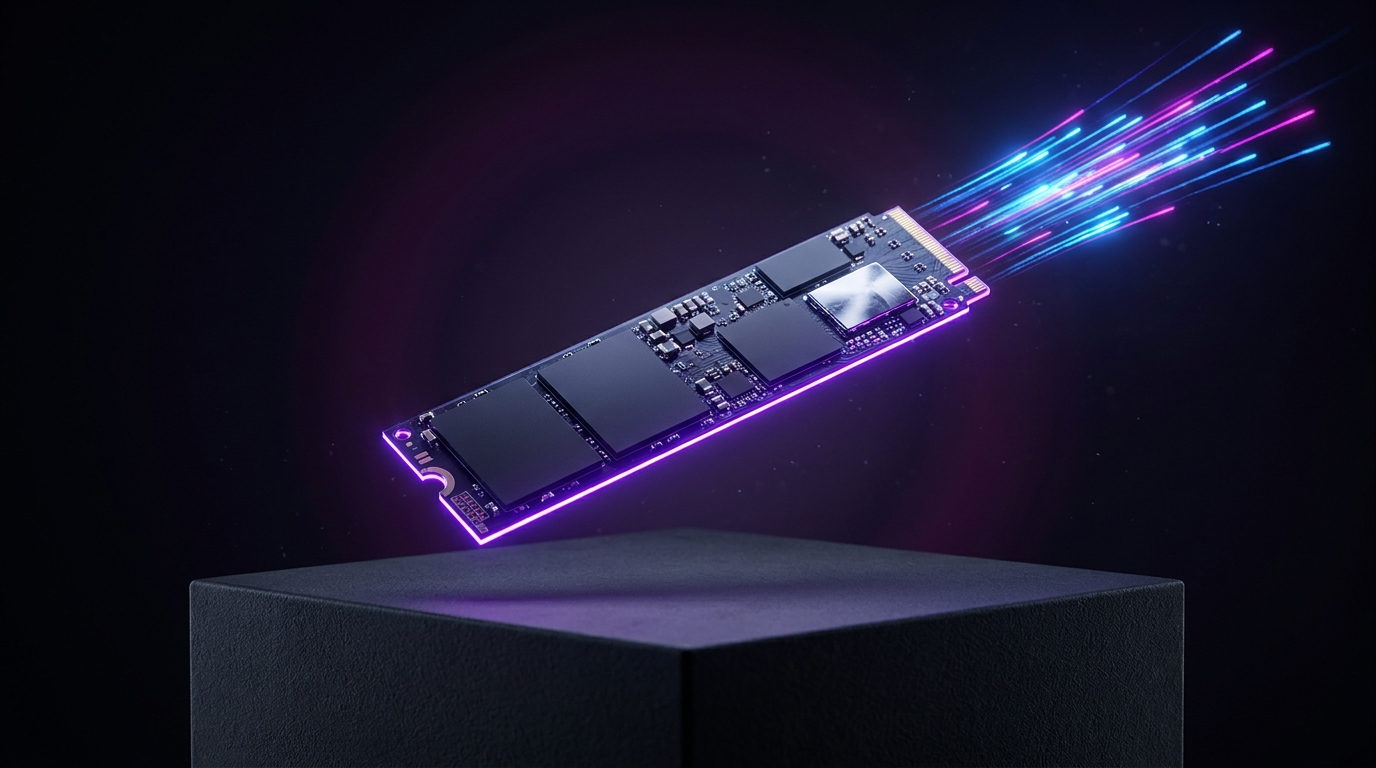
Every decade has one upgrade that changes the crime scene entirely. Last decade it was the SSD: the day loading screens stopped being coffee breaks. Now, with everyone converted, the market needs to sell the next number — and that's where the investigation resumes.
What the SSD really changed
Against the old mechanical drive there's no debate: booting the system, loading the game, crossing a loading screen — everything fell from minutes to seconds. Subtler and more important: mid-game hitches (the open world "stuttering" while loading the next region) practically vanished. Modern games already assume an SSD as a requirement, not a luxury. If you still game from a hard drive, this is the cheapest upgrade with the biggest impact in existence. Case closed on part one.
Gen3, Gen4, Gen5: the interrogation
Now the part marketing keeps blurry. The game-loading difference between an honest Gen3 NVMe and a flagship Gen5 is, in most titles, a few seconds — often indistinguishable. Why? Games load thousands of small files and depend on CPU decompression; the ad's gigantic sequential bandwidth is almost never the bottleneck. Direct GPU-to-SSD streaming technologies promise to change that math, and they're changing it slowly — but buying an expensive Gen5 today "for the future" is prepaying for a highway still under construction.
Where to put the money
The rational hierarchy in 2026: capacity first (1TB is the dignified floor; 2TB is real comfort in the era of 150GB games), reliable manufacturer second (controller and memory quality matter more than the generation), speed last. A 2TB Gen4 beats a 1TB Gen5 in quality of life in every scenario that matters. And the old SSD left over from the swap becomes an excellent external drive with a cheap enclosure.
The verdict
The SSD was storage's last real revolution — what came after is refinement at revolution prices. Buy space, buy a serious brand, ignore the number race. Instant loading is already yours; don't pay for it twice.
The decision in one table
| Scenario | Buy | Why |
|---|---|---|
| Still on a hard drive | Any SSD, today | Biggest experience jump available |
| Current PC, big games | Gen4 NVMe 2TB | Capacity beats extra speed |
| Older machine (no M.2) | SATA 1TB | Same perceptible jump, universal fit |
| Numbers enthusiast | Gen5 | Honestly? Wait for prices to fall |
— From the shadows, DKG.
Quick answers
Is Gen5 worth it?
For gaming, not yet: the loading difference versus a good Gen4 is seconds or indistinguishable, at much higher price and heat. Buy capacity, not generation.
How much space do I need?
With 100-150GB games becoming routine, 1TB is the dignified floor and 2TB is real comfort. An SSD filled past 90% also loses performance.
Does an SSD increase FPS?
No — FPS is GPU/CPU work. The SSD cuts loading and eliminates scenery-streaming hitches, which changes the experience, not the frame counter.
Is a hard drive still useful?
As a media vault and backup drive, yes — unbeatable cost per terabyte. As home for active games, it's retired.
🦇 The Knight's Recommended Arsenal
As an affiliate, I may earn a commission from purchases made through the links below — at no extra cost to you. Learn more.
Crucial T500 1TB
The sweet spot of price per gigabyte.
WD Black SN850X 2TB
Goodbye, library management.
Crucial MX500 1TB
A second life for old machines.
UGREEN NVMe Enclosure
Your old SSD becomes pocket storage.
Thermalright M.2 Heatsink
Temperature under control in marathons.

The Knight
Editor, Dark Knight Gaming
DKG's editorial vigilante. Covers gaming culture, hardware and the industry from the city's shadows — with method, skepticism and zero clickbait.
About the project →Related
Gaming headsets: what really matters (and what's just marketing)
The market wants to sell you LEDs and a "7.1 surround" sticker. I want you to hear the enemy's footsteps before he thinks about taking the second one. Let's separate signal from noise.
How to make your setup last 5 years
The machine doesn't die of old age — it dies of neglect and wrong upgrades. Maintenance and strategy for half a decade of loyal service.
Controller vs mouse and keyboard: the war nobody wins
Decades of flame war, and the answer remains the same: it depends on the weapon, it depends on the mission. An honest dossier on the hobby's oldest rivalry.