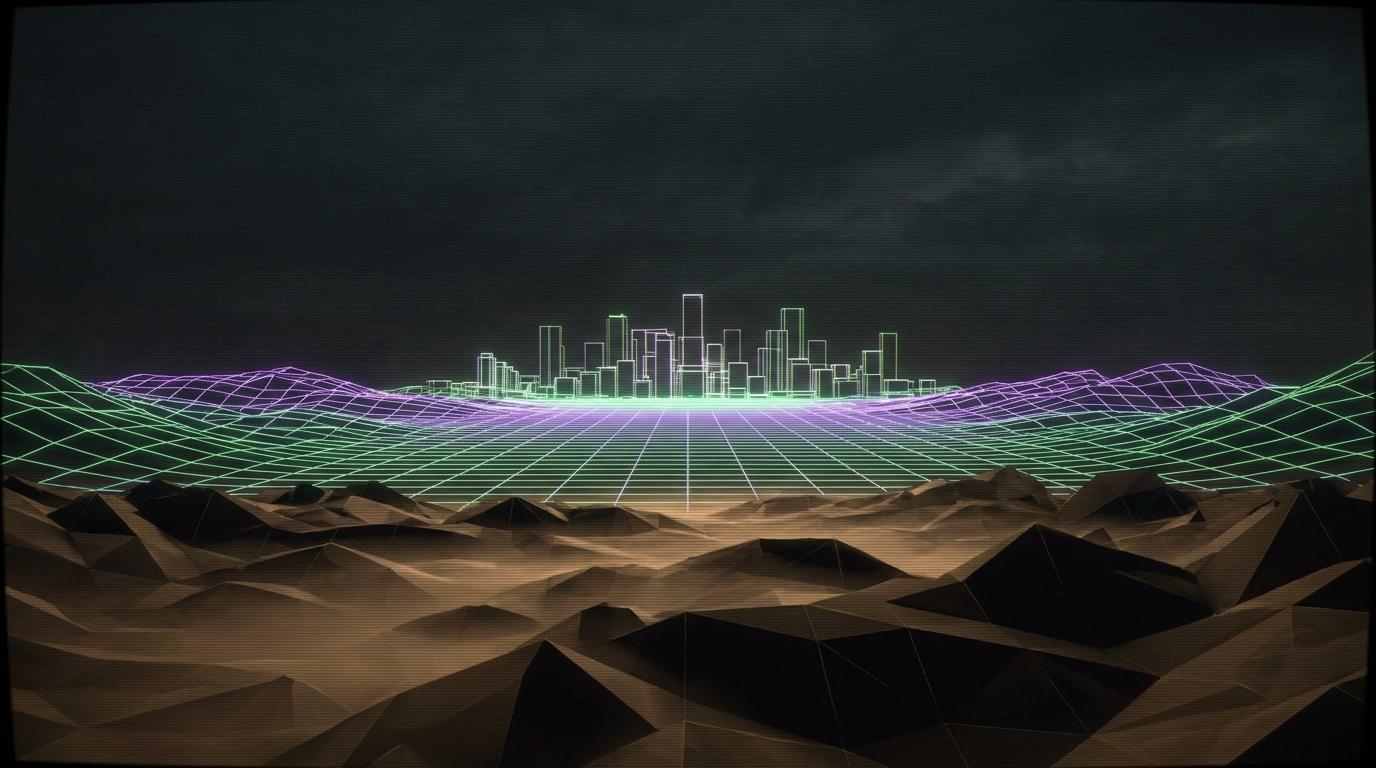
The evolution of open worlds: from empty maps to ecosystems
Patrolling a territory teaches a truth architects are slow to accept: size is not greatness. The history of open worlds is the story of the industry learning that lesson — paying dearly for every module of the course.
Era one: the promise
The seeds are old: eight-bit adventure worlds already let the player choose a direction before there was "content" to justify it. The leap came at the millennium's turn, when 3D crime cities proved the impossible: a place that kept existing when you ignored the mission. The shock wasn't what you could do — it was what you could disobey. Freedom became the medium's most desired product.
Era two: the inflation
And then the industry did what it does best: turned idea into formula and formula into inflation. The 2010s were the era of the form-letter map: towers to climb, hundreds of icons dumped, collectibles per square kilometer, the same enemy camp copied forty times. Ever-bigger and ever-hollower worlds — checklists with scenery. The player crossed entire continents without a single memory, guided by GPS, harvesting percentages. Size had defeated greatness. Briefly.
Era three: the correction
The reaction came from two fronts. On one side, the wild kingdom that returned exploration to physics and curiosity — if you can see it, you can go; if you can go, the journey is the content. On the other, the interposed lands that dared to hide instead of point: no markers, no list, just a world too dense not to reward whoever looks twice. Both schools proved the same theorem by opposite paths: exploration is discovery, not displacement. The map icon kills exactly what it promises to deliver.
The state of the art
Today's mature open world is measured by other rulers: density over extension, systems that react (weather, factions, ecology) over scenery that poses, and the definitive question — would this place exist without me? The best ones answer yes: they're ecosystems with dignity of their own, which the player visits as a guest, not an auditor. From the empty map to the breathing world, decades of lessons fit in one line of my notebook: a place isn't measured by its kilometers. It's measured by its stories per kilometer.
— From the shadows, DKG.

The Knight
Editor, Dark Knight Gaming
DKG's editorial vigilante. Covers gaming culture, hardware and the industry from the city's shadows — with method, skepticism and zero clickbait.
About the project →Related
Souls: the saga that taught games to respect the player
Before 2009, difficulty was punishment without purpose. After Demon's Souls, it became a language of respect. I was there. I remember.

Survival horror: the history of the genre that taught games fear
Fixed cameras, counted bullets and creaking doors: the chronicle of the genre that proved the player's weakness is design's most powerful tool.

Multiplayer: from split screen to global crossplay
From your friend's elbow on the couch to a squad spread across three continents: how games learned to connect us — and what got left on the couch.